The History of Greens Norton
Lying a few miles north of the town of Towcester, Greens Norton is a small village of 1500 souls which grew beside the great Roman Road, Watling Street, and which forms part of its north eastern boundary. Evidence of a Roman settlement has been found just to the south of the village.
The parish is a large one, measuring some 2300 acres and encompasses several hamlets including Duncote, Caswell and the more or less abandoned settlement of Burcote. The village was described in the 19th century as long straggling, wide and irregular. Today the village centres on the church and the village pub, the Butcher’s Arms, and has grown considerably in the 20th century.
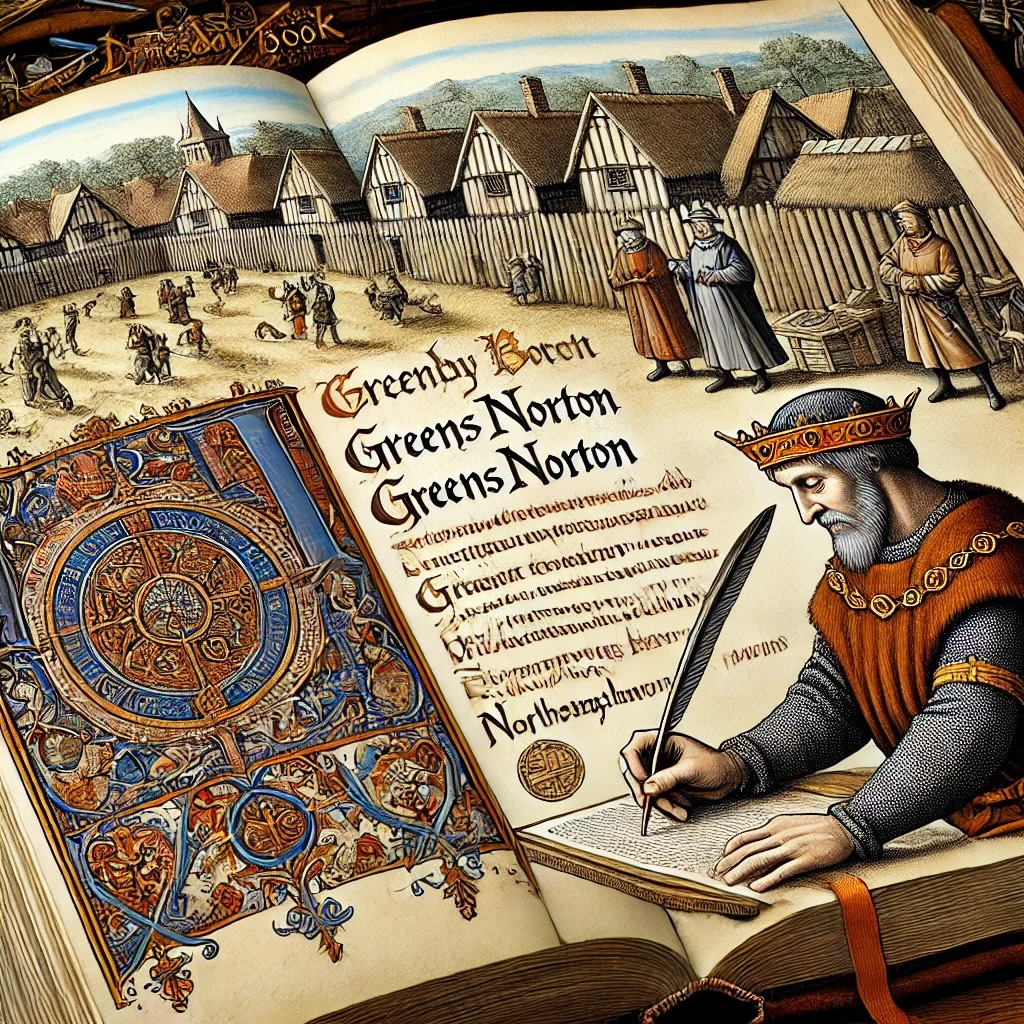
The village was part of the royal estate of Edward the Confessor, and after the Norman invasion of 1066 was seized by William the Conqueror. According to Domesday Book of 1086, the manor was wealthy, worth £20 per year.
Greens Norton was so lucrative that it remained a part of the Royal estate until being sold by Richard the Lionheart to Baldwin de Betun, Earl of the Isle of Wight, at the end of the 12th century. When the village was assessed for tax in 1301 there were an impressive 59 residents eligible to pay tax, the top two payers being the Lord of the Manor, Lord William Marescall, and Geoffrey de Braddene. According to some sources the Royal Manor included extensive woodland, up to perhaps 12,000 acres, extending into neighbouring parishes and which eventually became the Forest of Whittlewood, a separate area of Royal Jurisdiction under Forest Law.
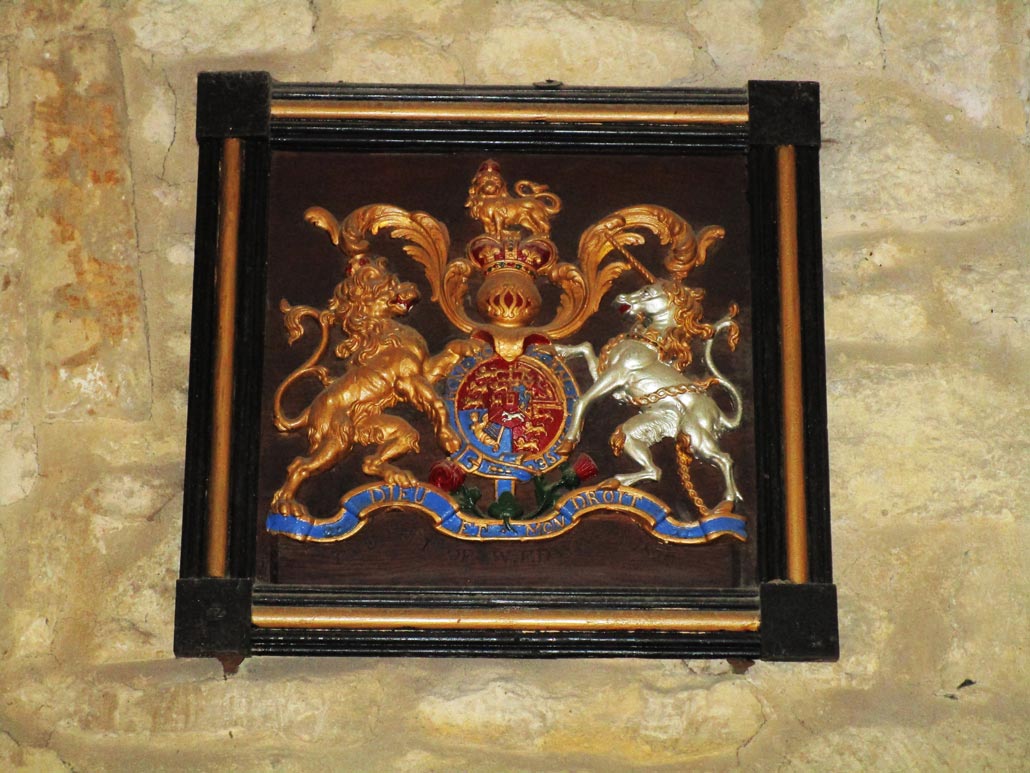
The Village is perhaps most well known for its ancient church, St Bartholomew’s, which was founded during the 7th century and is a Grade I listed monument. Parts of the church can be dated to the 10th and 11th centuries and it is one of the few country churches which retained its painted
Royal Arms of Elizabeth I.
Its font dates from the 1140s and was carved at St Peter’s in Northampton. A Chantry House was built across the road from the church in 1496. Within the church can be found the alabaster effigies of previous Lords of the Manor, Sir Thomas Greene, who died in 1457 and his wife. An effigy of a second Sir Thomas Greene (d. 1462) and his wife Maud, are inscribed in brass. The lord’s being hosted with advowson to the church.
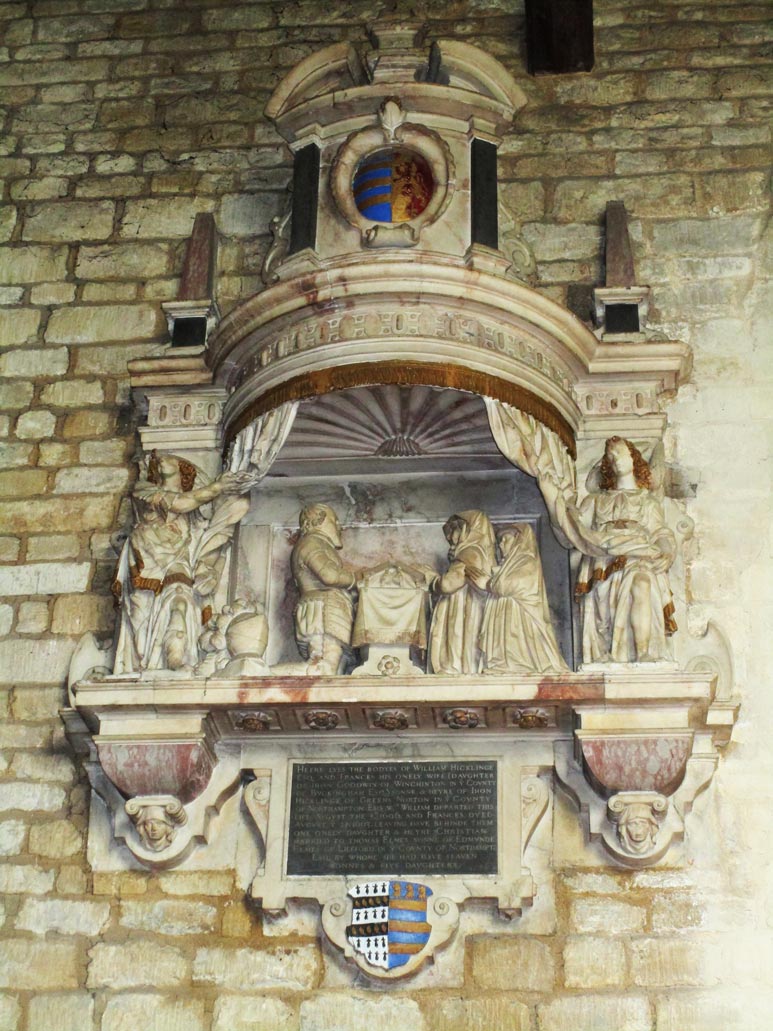
An impressive alabaster, wall mounted monument celebrates the life of John Hicklinge, a prominent resident of Greens Norton, who died in 1558.
As noted above, Greens Norton has long had royal associations. It was granted a Royal Charter for free warren for the Lord of the manor and a deer park was recorded in the fifteenth century. After being sold by Richard I and remaining in private ownership for 300 years it came back into Royal hands during the reign of Henry VIII, when it was appended to the Honor of Grafton.
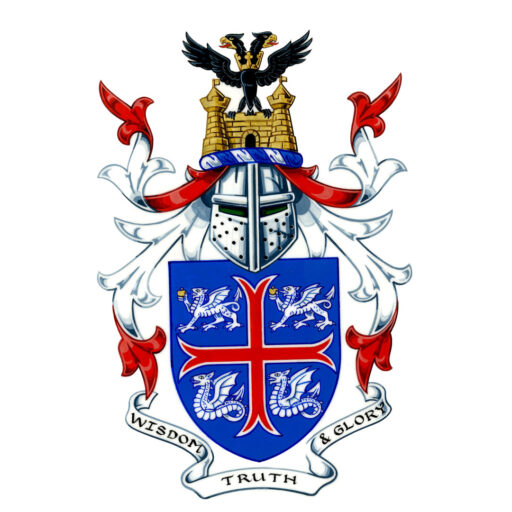
Between the 12th and 16th centuries it was largely under the control of two important families; the Mareschalls, who descended from Baldwin de Betun, and the Greenes.
Greens Norton is the reputed birthplace of Katherine Parr, the last, and surviving wife of Henry VIII. Her mother, Maud, was the daughter and heiress of Sir Thomas Greene, Lord of the Manor.
The Greene family were so influential that the village, which had previously merely been known as Norton, became appended with their surname. The name ‘Norton” itself derives from the Anglo Saxon for ‘North Settlement”. The village was known by a number of names during the Medieval period. Sometimes just as Norton, latterly Norton Davey until Greens Norton became fixed in the early 16th century.
During the reign of Edward VI the manor was granted to Catherine’s brother, the 1st Marquess of Northampton. It remained a royal possession, being leased to a number of aristocratic tenants until it was eventually settled on Catherine of Braganza, the wife of Charles II. In 1705 the manor and
its lands in the village passed to the Duke of Grafton who owned and shaped the life of Greens Norton into the 20th century.
The most important event in Greens Norton after Domesday Book was the Enclosure of the great open fields which surrounded the centre of the village in 1799. Carried out under the auspices of the Duke of Grafton, the Lord of the Manor, the baulks and strips of the open fields which had dominated the economy of the village since the Medieval period were replaced by the patchwork of fields and hedges which exist now. The Enclosure reduced the number of farmers and labourers needed and many villages adopted the trade of shoemaking which became the predominant trade of the inhabitants in the 19th century. There had been four open fields before the enclosure and evidence of the old ridge and furrow strips can still be glimpsed in the landscape. This was really the end of a process which had been begun at the end of the 15th century by the Lord of the Manor who pulled down the hamlet of Burcote in the parish and enclosed its open fields to graze sheep.
In 1940 the Ministry of works acquired a patch of land in the village and erected a building to be
used by the Land Army Movement. In 1943, with Allied success in Italy, it was converted to use as
a prisoner of war camp, housing 35 Italian captives. After the war the site was developed to a youth hostel and was eventually converted to the Greens Norton Community Centre.
During the height of the Second World War, Caswell Farm, one of the largest farms held by the Duke of Grafton Estate was used by the Plessey Company as the base of one of their laboratories. After the War the site remained as a site of scientific research and in 2009 became the Caswell Park Science and Technology Park.
The ownership for the Lordship changed in 2007. The current Lord of Greens Norton is Mark Howard Alton.
During 2017, the local public house, the Butchers Arms was renovated by a consortium of local villager’s and investors. It has now become a hub for the local area with a strong community ethos.
In 2025, the parish is now encircled within the proposed boundary of the Towcester development plan, a joint core strategy to significantly expand business and enterprise. It looks like the area will see fundamental growth in both housing and industry in the future years.