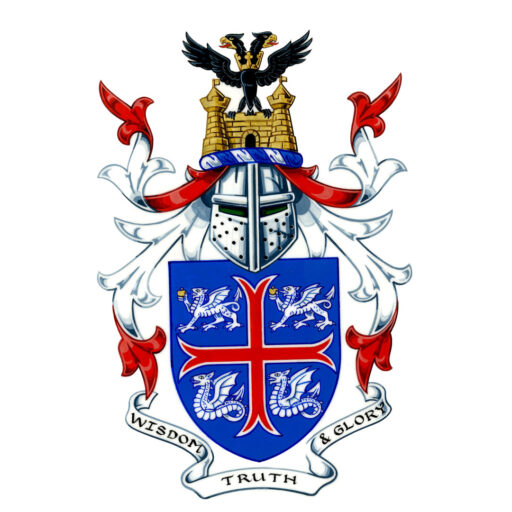
Mark Howard Alton - Lord of Greens Norton - Family Genealogy
A short version of the Alton Family history should start with the cultural north sea Germanic Group called the Ingaenic people (Ingaevones); part of this group being the Angle Tribe from the modern day location of the Angeln Peninsular in a small region in Schleswig Holstein, north of Hamburg named for its hook-like (angle) shape.
The Angle Tribe were located in the same general German region as current day Altona and located on the north of the Elbe river.
They were mentioned by Tacitas in AD 98 as living by the Elbe and were worshippers of the Godess Nerthus (Mother Earth) and later by the Venerable Bede identifying their homeland as Angulus (modern Angeln in Schleswig-Holstein.)
History dictates from the Anglo -Saxon Chronicles that between 449-455 AD, King Vortigen, a tribal king in Brittania invited the Angles to come and receive land in return for helping him to defend against marauding Picts. Those successful Angles sent word back that good land was available and that the British were worthless.
A wholesale emigration of Angles and kindred German peoples followed leaving a deserted homeland to be later occupied by Danes in the 8th century.
The Angles gained ascendancy between 475 – 495 with the Kingdom of the Iclingas, named after their legendary ancestor Icel a leader of the Angles on the migration onto land formerly occupied by the Iceni Tribe. Gradually they settled along the Trent valley and were instrumental in the development of the Kingdom of Mercia (Derbyshire / Leicestershire / Nottinghamshire) circa 527AD.
They bypassed the Celtic settlements reaching central hubs such as Repton in Derbyshire and moved into the side valleys such as the Amber which joins the Derwent at Ambergate, finding fertile areas for farming. The Angles continued the Roman tradition of lead mining in Wirksworth; a vital industrial hub for the later Mercian Kings.
They rose to prominence under King Penda and reached their peak with King Offa (757 – 796) who combined both Angles and Saxons into the Anglo-Saxons. The previous Tribes who had previously warred over territory combined into seven Anglo Saxon Kingdoms leading to the dominance of Wessex and the creation of a single unified Kingdom.
The Normans under William the Conqueror took control of England and in 1086 completed the Domesday Book. The growth of Duffield on the Derwent was attributed to the invading Normans, later making it a stronghold.
Alton and sometimes Iderigehay and Alton was not a Manor, but was recorded as a Hamlet within the dependency of Wirksworth, deriving from the old English Aet-Tun meaning Farm at the source or stream. It was later recorded as located on the edge of the Duffield Frith – a Royal Forest.
Manorial records show a Robert de Alton circa 1285 having wood cutting violations within the Frith and a Thomas de Alton giving frankpledge in 1388.
Due to the Black Death of 1348-1350 the Duchy of Lancaster, being land allocated to the reigning monarch had a need to keep necessary bureaucratic records and the name Alton emerged as a distinct Family name and hence losing the de prefix of Norman times thereafter.
There are manorial records of a John Alton being witness to a grant of land in 14/11/1485 and a William Alton, a Yeoman Farmer had several Chatsworth Estate leases in 1670 and was living in Shottle.
A Richard Alton was living at Colebrook Farm in Ashleyhay in 1591 and a further five Alton generation living in the small and beautiful village of Shottle before moving eastwards onto Denby, Duffield, Belper and Holbrook, all being in Derbyshire. The gradual movement east took thirteen generations before moving into Nottinghamshire at Cinderhill and Bulwell near Nottingham.
Brothers Jack, Percy, Edgar and William, sons of Willis John Alton who was born in Cinderhill and died in Bulwell in 1940 moved to the village of Toll Bar near Doncaster with the opening of new collieries in the circa 1920’s.
The genealogy shows eighteen generations of the Alton family (excluding the de Alton’s).
The Family were in situ many centuries before Athelstan, the first King of England and grandson of Alfred the Great (of Wessex) after his decisive victory at Brunanburh in 937. The Country being referred to as Engla-Lond or Engla Land in the late 9th century.
The direct family line has been of English birth and heritage since records began and it would appear that the direct Family line has moved less than a hundred miles in a thousand years.
The descendancy of the Alton Family is derived the Derbyshire Amber Valley Records, the Anglo-Saxon Chronicles and DNA evidence.
On 7/5/2022 the Alton Family had a ‘get together’ event at Armthorpe, near Doncaster which proved very successful.